
Harmful Drugs or Healing Mushrooms: It's Your Choice
I've been very frustrated by the reports I'm seeing in the past two days. Swiss pharmaceutical company Roche got FDA approval for their drug Tamiflu, which is a potent chemical formulation made from a Chinese herb known as star anise. An aside - it's also a pretty tasty herb used in high-end cooking. The FDA approved this drug in December 2005 for treatment of influenza and possibly the avian flu which health officials fear could create a pandemic should it mutate into a form easily passed from human to human. If you look on the FDA's website, just one month prior to approval they released a report stating that Tamiflu was one of eight drugs to be examined by a Pediatrics panel. The reason: "...a number of adverse event reports were identified associated with the use of Tamiflu in children 16 years of age or younger. These adverse event reports were primarily related to unusual neurologic or psychiatric events such as delirium, hallucinations, confusion, abnormal behavior, convulsions, and encephalitis." Now medical reporting can be a bit detached in its descriptions. More recent reports of "adverse effects" of children taking Tamiflu includes two separate cases of children aged 12 and 13 throwing themselves out of the window of their apartment buildings and plummeting to their death. Nevertheless, in December of 2005 the FDA approved Tamiflu.
Tamiflu has also been in the news because Roche claimed that it was a good contender to fight the potential avian flu epidemic that we've been warned about. A flurry of news stories centred around governments keen on stockpiling drugs that might fight the avian flu virus alternately ordering millions of bottles of the drug and berating Roche for not allowing other drug companies to make the drug as well. In the meanwhile, Roche's revenues rocketed skyward and by September 2005 their revenues for the year were already up 263%. And yet, there has been no definitive answer as to whether the avian flu virus can be stopped in its tracks by Tamiflu. Tamiflu has proved effective against H5N1 in mice in laboratory tests. But a look on the US Department of State website reveals this statement:
"Based upon limited data, the DHHS/CDC (Centre for Disease Control) has suggested that the anti-viral medication Oseltamivir (brand name- Tamiflu) may be effective in treating avian influenza A (H5N1)."
Now we learn about more than 100 new cases of children taking Tamiflu who are experiencing delirium, hallucinations and convulsions, so health officials must warn parents to watch children taking Tamiflu for signs of "bizarre behaviour".
Let's step back from this situation for a minute. A drug company has come up with a drug to treat influenza. The accepted medical treatment for influenza is to drink lots of liquids and get plenty of rest. Why is there a need for a drug for this? Why does the FDA approve a drug that may only shorten the effects of influenza, that may or may not be effective against H5N1, and which causes harmful effects when given to children? Why do governments spend millions of dollars on such a drug? Why are parents giving drugs to their children when water and bed rest is recommended?
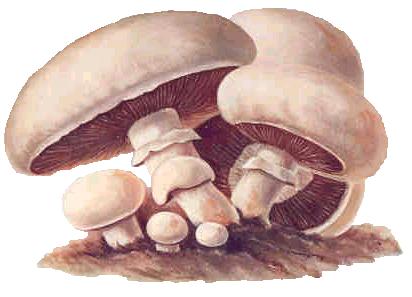
There are safe and natural methods of combatting viruses that have none of these harmful effects, come from a number of companies, are not expensive and therefore accessible to most people? Case in point: New Chapter's Life Shield Throat Spray (a blend of 3 potent mushrooms) has been tested to actively fight 5 strains of the avian flu, West Nile, Yellow Fever and other viruses. Since the product is made from organic mushrooms processed at low temperatures and left mainly intact, they cannot produce harmful side effects and are safe even for young children over the age of two.
New Chapter's Paul Stamets is a mycologist who has developed the LifeShield and other mushroom products and is currently involved in two National Institutes of Health-funded clinical studies on cancer and HIV treatments using mushrooms. His patent-pending low-processing technologies and high-quality organic mushroom sources are being tested in animal clinical trials and are successfully fighting powerful pox viruses. His products quite simply work. And some actually clean up the environment while they are growing, too in a process called bioremediation. That might help the contaminants produced by pharmaceutical companies. . But that's another story....
I suspect that ignorance could be the only thing standing in the way of everyone choosing proven natural remedies for health concerns, rather than pharmaceutical ones which often come with a handful of risks and complications. When a disease is not life-threatening there is also the option to do nothing, to take no remedy and let the body fight the infection on its own. Of course, we always have the skeptics. A common skeptic response to alternative health claims is: "one should question whether or not these remedies, which tend to be pricey, actually work." I agree with the first part, and noone should take a product that has not been proven to work, unless taking it poses little risk. For example I might take a common herb to help me treat a headache and if it's ineffective, so what? But I wouldn't use it to "cure" cancerous cell-growth. But addressing the question of cost, is $25 for a bottle that can last a family of 4 an entire flu season pricey? How many pharmaceutical remedies are that inexpensive? I've never heard of prescription drugs for four people costing as little as $25.
This $25 bottle of LifeShield Throat Spray is just one product that I know about because I've been doing product demos for New Chapter for years, and am now a vendor. New Chapter is quiet about their products' successes and seem to spend their extra dollars on manufacturing instead of marketing. But the point is, there are likely other high-quality non-pharmaceutical solutions out there. Why else would the US Army Medical Research Institute of Infectious Diseases (USAMRIID) be examining medicinal mushrooms in their joint biodefense antiviral screening program with the NIH unless they believed the non-pharma route was a viable option? This is the USAMRIID after all whose vision is "to be the Nation's preeminent research laboratory providing cutting-edge medical research for the warfighter against biological threats". These folks would not waste time investigating ineffective methods.
We all owe it to our health, our pocketbooks and our peace of mind to investigate ways of treating health problems without pharmaceuticals, especially for common, generally low-risk health problems such as the cold and flu. Learn about better safer alternatives to drugs because they are out there. And don't forget that we choose where to put our money and that's how we show our support for businesses. I'd rather support a mushroom farmer who's trying to save the world through fungi than throw a few more dollars at a faceless, polluting big corporation billion-dollar revenues.
Labels: healing mushrooms, immunity, pharmaceuticals, viruses
posted by Caroline @ 3:32 PM
1 Comments


